

There’s nothing like a good cinematic epic. A sweeping scale, a large thematic and narrative scope, grand spectacles, and lengthy runtimes are what the genre is all about, and that requires some great writing—perhaps even more so than your average movie. Throughout history, there have been several epic movies bolstered by some of the greatest screenplays ever written.
It could be a Hollywood classic like Lawrence of Arabia or an iconic international achievement like Seven Samurai, but there’s something that all of these great films have in common: they all demonstrate how important it is for an epic to be well-written. Compelling character work, an entertaining narrative, thought-provoking themes, and a good structure are all guaranteed to turn a regular epic into one of history’s biggest cinematic masterpieces.
10
‘There Will Be Blood’ (2007)
Paul Thomas Anderson is no stranger to epics, and that’s what has led many people to call him their favorite filmmaker working today. When talking about his magnum opus, several answers are bound to come up, but there’s one movie that’s guaranteed to be mentioned more than the others. There Will Be Blood earned PTA his first-ever Academy Award nominations for Best Directing and Best Picture, as well as his third Best Screenplay nod.
The film also earned Daniel Day-Lewis his second-ever Oscar victory, and what a well-deserved one it was, as his might just be one of the greatest acting performances of all time. But excellent acting isn’t all that There Will Be Blood has going for it. It’s one of the best movie masterpieces of the last 50 years, a gargantuan character study all about the destructive nature of capitalist greed. The dialogue is as quotable as it is meaningful, and Daniel Plainview is perhaps the best-written character in PTA’s whole filmography.
9
‘Schindler’s List’ (1993)

He’s the father of blockbusters and the man behind some of the most entertaining films in Hollywood history, but Steven Spielberg also directed one of the most heartbreaking American films ever made, Schindler’s List, written by Thomas Keneally and Steven Zaillian. It’s one of the best biopics of all time, bolstered by Spielberg’s attention-driven direction, the beautiful black-and-white cinematography, and Liam Neeson and Ralph Fiennes at the top of their games.
Keneally and Zaillian’s screenplay is as profound as it is gut-wrenching, a story about the Holocaust seen from the eyes of a complex man who tried his best to do the right thing in the face of such atrocious evil. It’s as complicated a subject as it sounds, but the writing duo treats it with both care and sensitivity. The movie could have probably done with a deeper exploration of Schindler’s darker side, but as it is, it’s one of the most powerful character studies of the ’90s, packed with some of the most emotionally potent scenes in the whole war movie genre.
8
‘Lawrence of Arabia’ (1962)

Lawrence of Arabia is one of the greatest war epics of all time, a massive 3-and-a-half-hour-long spectacle with some of the biggest and most thrilling combat sequences the genre has ever seen. It’s also one of the greatest character studies of all time, an intimate and deeply personal study of one of the most complex and fascinating figures in World War I. The fact that David Lean, the master of the epic genre, was able to balance those two seemingly mutually exclusive things together is astonishing.
That’s what makes Lawrence of Arabia one of the best war movie masterpieces of all time, all thanks to Lean’s direction and Robert Bolt and Michael Wilson‘s screenplay. It’s some incredible writing, keeping its study of T.E. Lawrence psychologically intense and layered without ever sacrificing an ounce of spectacle. Character studies are hard enough to get right as it is, but an almost 4-hour-long set during WWI? Even more of a challenge, which makes Bolt and Wilson’s success all the more admirable.
7
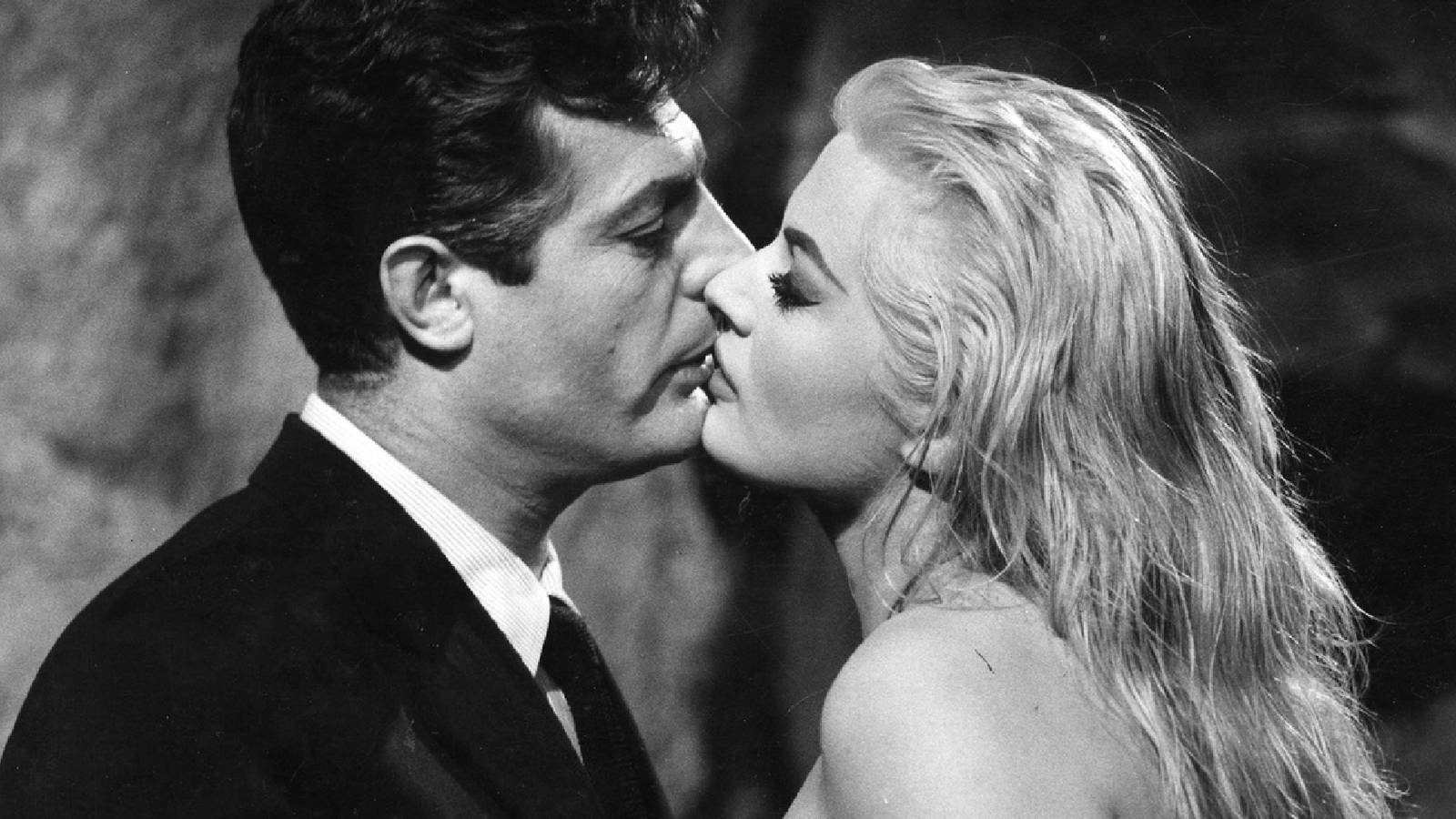
‘La Dolce Vita’ (1960)

Federico Fellini is probably the greatest, most groundbreaking, and most iconic Italian filmmaker in history, and that’s hardly a surprise. His filmography is filled to the brim with masterpieces, which is something most directors can’t say about their oeuvre. La Dolce Vita may just be his best work, a satirical dramedy about the existential void and spiritual emptiness that comes with the search for meaning in a consumer-driven society.
La Dolce Vita is one of the most perfect international movies ever, bolstered by one of the best Italian screenplays ever written. Penned by Fellini, Ennio Flaiano, and Tullio Pinelli, the script makes a highly episodic 3-hour-long epic feel like a masterfully condensed and perfectly calculated epic. Its genius non-linear structure replaces traditional understandings of plot with a far more theme-driven exploration of existential ennui in post-war Rome. The effect is one of the most unforgettable cinematic masterpieces of the ’60s.
6
‘Seven Samurai’ (1954)

There has never been a filmmaker quite like Akira Kurosawa, who many would refer to as the greatest Japanese auteur cinema has ever seen; some would even call him the single greatest movie director of all time. He made so many masterpieces that trying to decide on what his magnum opus is would be a messy, pointless task. Still, any cinephile can certainly point to the Kurosawa film that’s easily the most iconic, the constantly-imitated-but-never-matched Seven Samurai.
When countless films, from Westerns like The Magnificent Seven to animated family movies like A Bug’s Life, have imitated your general plot premise, you know you’ve got a timeless screenplay on your hands. Kurosawa, Shinobu Hashimoto, and Hideo Oguni‘s script is a work of art unto itself, making each member of the vast ensemble equally fascinating without ever neglecting the entertainment value of the story. Seven Samurai has long been regarded as the best samurai movie ever, and for good reason.
5
‘The Lord of the Rings: The Return of the King’ (2003)

How could one possibly take J.R.R. Tolkien‘s seminal The Lord of the Rings and turn it into a movie trilogy worthy of its source material’s legacy? By bringing Peter Jackson on board the project, apparently. The Kiwi filmmaker’s Lord of the Rings series is the greatest fantasy film trilogy of all time, culminating in what might be the greatest fantasy movie masterpiece ever made: The Lord of the Rings: The Return of the King.
The screenplay led to one of the whopping 11 Oscars that the movie won in 2004.
The movie’s script was written by Jackson, Fran Walsh, and Philippa Boyens. It led to one of the whopping 11 Oscars that the movie won in 2004, an all-time record shared only by Ben-Hur and Titanic. It’s almost unbelievable that a 3-and-a-half-hour-long (about 50 minutes longer if you watch the even-better extended edition) genre epic has these many compelling character arcs, memorable moments, quotable lines of dialogue, and timeless themes. There isn’t a single dead spot in Return of the King‘s narrative, and that’s in no small part thanks to its flawless screenplay.
4
‘Amadeus’ (1984)
If the history of cinematic epics shows anything, it’s that well-written character studies lend themselves perfectly to the genre. For proof, one needn’t look much further than Amadeus, one of the best period movies worth watching over and over again. It’s the story of both Wolfgang Amadeus Mozart and Antonio Salieri, but it’s mainly focused on their timeless rivalry—and the result is the best film about rivals this side of the sports genre.
This period piece has some stunning production values and a pair of legendary performances from Tom Hulce and F. Murray Abraham, but the majority of its strength finds its source in the script. It’s emotionally intense and thematically layered, turning a pair of historical figures into two of the most fascinating characters of ’80s cinema. It’s a thoughtful study of genius and jealousy, the quintessential film of its kind.
3
‘The Godfather Part II’ (1974)

Its predecessor is a matter worthy of a conversation of its own, but there’s no denying that not only is The Godfather Part II regarded by many as one of the few sequels superior to the original, but sometimes even as the greatest American film of all time. It’s not at all a crazy argument, either. Part prequel and part sequel, this masterful character study is even bigger and longer than The Godfather, clocking in at a runtime 25 minutes longer.
But while bigger doesn’t always equal better, it may just do here. It’s far and away the greatest sequel ever nominated for the Best Picture Oscar, perfectly performed and even more perfectly written. The juxtaposition between Vito’s slow rise to power and Michael’s dramatic spiritual death is as compelling as it is heartbreaking, sprinkled with some of the most perfectly constructed scenes of any drama in history all throughout.
2
‘The Godfather’ (1982)

Whether The Godfather is or isn’t a better film than Part II overall is irrelevant when talking about the movies’ writing. The Godfather is such a perfectly written movie that Mario Puzo (who authored the book the movies are based on) decided to buy a book to learn the craft of screenwriting after winning the Oscar for Best Screenplay. The first chapter’s lesson was to study The Godfather. It’s a fun story, but it’s entirely true: This screenplay has been taught in film schools the world over for decades for a reason.
The Godfather is one of the most timeless drama movies of all time, full of quotable dialogue, engaging character arcs, flawlessly structured scenes, and with a third act that packs a hell of a punch. It’s an airtight, structurally perfect, profoundly Shakespearean all-American tragedy whose elegance gives no signs that it will ever age. There has never been a gangster epic quite like this one, and it’s unlikely that there ever will be.
1
‘Pulp Fiction’ (1994)

It’s arguably not that bold a claim to say that Quentin Tarantino‘s screenplay for Pulp Fiction is among the greatest ever written. It’s probably a lukewarm take at most. Whatever the case, it’s true: This Palme d’Or winner is one of the best movie masterworks of the last 40 years, and though its exceptional cast ensemble and Tarantino’s pitch-perfect direction play a huge role in that, it’s arguably mostly thanks to the script.
Tarantino revolutionized multi-story narratives to the point that several movies after 1994, from 1999’s Go to 2000’s Amores Perros, tried to imitate its magic. It’s one of the greatest dramas ever made, with the best dialogue, thematic work, character writing, and sense of pacing of any Tarantino screenplay. The movie as a whole is a masterpiece, but it’s also a testament to what great writing can do for a cinematic epic.
Source link
